Government Unsuccessful??
Liberty and Independence.. oh.. and Folklore!

Government Unsuccessful??
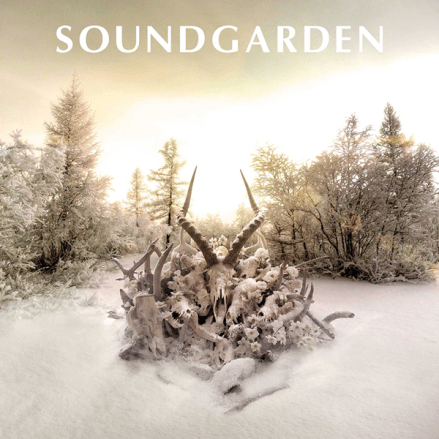
With age indeed comes change. Typically in the music business the change is in the direction of a more jaded, repetitive, unemotional, professionally produced grind. Not so with Soundgarden. With age has come wisdom, talent, and their work has definitely stepped into the very rare world of true art. Maturity often comes at the expense of “soul,” but the heart is beating in these bad boys. Their entire collection is brimming with brilliance in many hues. Every release has been a masterpiece and each has been a step atypical for the genre.. hard-rock? grunge? They’ve been an inspiration to the entire modern musical community. This work has the same reverberating soul you find in everything they’ve done so far, but the years have polished their craft into genuine art. This is a full step above typical, and then some. I have a hard time hearing what’s being said because it’s being delivered on such a beautiful platter. Pay attention to this one, you’ll be more than rewarded. “…I’m addicted to feeling… I’m a ghost and a healer… I’m the shape of the hole inside your heart… yes something is being said, and holy Hanna, what a magnificent listen. Amidst the tripe typically being served up today, this is an absolute sparkling beauty!! Thank you Soundgarden for the most magnificent revival I can remember. I pity the soul that can’t connect to this one!
ps… Don’t steal it, buy it! These boys deserve a reward for this magnificent piece..
The unfortunate fact of the matter is that all this “gun control” bullshit has nothing to do with stopping “mass-murder,” lowering the crime rate, accidental shooting, nor anything in the “public interest”. It is about people control. Government is a living organism fighting for it’s growth and security. The founders recognized this and wrote the Constitution in an effort to keep government under control and make it a useful tool of the people. Unfortunately the natural tendency and will of government has finally overcome the Constitution, as the anti-federalists predicted, and it has become rather than a tool of the people, the master of the people and the only hope now is the will of the people, which as Karl Marx pointed out, is the actual controller of everything, thus the trickery required to turn it in adverse directions, as the commielibs have accomplished throughout most of the world, and now here in America by harnessing the Democrat party and tricking people into believing that “liberalism” refers to “liberty” when it actually refers to the liberal application of government, which by definition refers to the decrease in independence. Unfortunately the Republican party is not far behind in terms of fostering governmental control. There is only the libertarian party, in which the “liber-” actually is in reference to “liberty” in which there is hope for the freedom/responsibility of the people, to prosper.
Apologies.. I can’t help it. Seems I always find my way to the point from which I recognize that the only thing that matters is what I think about it, and here it is: I stumbled on to Jack London at 8 years of age. It was in the midst of a Mark Twain frenzy. (I was much more intelligent at the age of 8 than I am today). Jack London’s Call of the Wild reached out to me from my father’s library (with my father’s help, as I recall), and my love of Jack London began. My initial reaction was from somewhere in the same neighborhood as the one I see people reporting after having read scripture. A kind of an “Oh my God! This is true!” sort of thing. Jack London took a firm grasp on the soul of an 8 year old boy which 50 years later remains unscathed.
Call of the Wild, White Fang, The Sea Wolf, Burning Daylight, all read in awe by the son of a hunting, fishing, trapper who lived and breathed personal freedom. The power and majesty of London’s hero characters were inescapable. These were tales of independence, adaptation, defiance and the mastery achievable by the power of individual will. At 8 years old I recognized the independent love of which London spoke between Buck and Thornton. A love that was is a natural truth many human beings never comprehend. It was a love that lived London’s soul and he breathed it into the pages he wrote. Those pages breathe the soul of Jack London into the heart of heart of the reader. In this case, twas me.
In later years I began hearing of interesting aspects of London’s personality. One’s mate should be selected by good breeding, not love? Stories of drugs, alcohol and suicide. And most astounding to me, his anti-capitalist, socialist bent. Jack London, one of the first celebrities used to endorse commercial products, such as grape juice and men’s suits. A man who made a personal fortune, on his own. A man who took life by the balls and lived the dream most aren’t capable of even imagining. Jack London opposed capitalism? Now wait a minute! Here’s a mystery.
It wasn’t until the tender old age of fifty-something that I stumbled onto “The Handsome Cabin Boy.” Being the musician that I am, it was the name of the story which caught my eye. “The Handsome Cabin Boy?” Wasn’t that Jerry Garcia? Kate Bush? Roger McGuinn? No wait, it goes even deeper, further back, Martin Carthy, John Roberts, Aberdeen’s Jeannie Robertson (one of the greatest ballad singers of all times). Ah, still further it goes. Indeed, “The Handsome Cabin Boy” is the tale told by a traditional folk ballad coming from many years before London wrote his tale.
The traditional folk ballad has an interesting history. It usually includes certain aspects of life most are taught to avoid. Crime, booze, drugs, sexual adventure, wealth. Ballads tell colorful tales and carry messages of the rewards these culturally inappropriate behaviors can deliver to the unwary. In this case we have a common sailor’s dream that among the crew is a girl dressed as a boy. In the ballads based on this fantasy it’s always an officer, typically the captain who discovers the girl’s identity, thus the plight of the pregnant cabin “boy” would be seen as tragic from the girl’s point of view. Yet to sailors and those of any type similar (male), the power of the tale is comedic. Oh my goodness! They’s a gal on board. I’ll be damned, the cabin boy’s a girl! How convenient and boy howdy!
The actual possibility of such a turn is not all that far fetched. A girl in pursuit of some real adventure, wanting to see the world, wanting to touch the life the boys lead, trying on the testicles, as it were. Quite believable, and what could more natural than slipping into the position of “cabin boy” for a young lady with such ambitions? No problem, I can do that. And then the adventure begins. The original ballads end up with the cabin boy becoming pregnant at the hands.. well.. something, of someone in the crew, and thus the folk, “mind yer damn p’s ‘n q’s” lesson is delivered. The little wench is undone by childbirth. The boy is a girl after all, and now a pregnant girl to boot, and hundreds of miles from home. What is such a poor, unfortunate girl to do?
It’s all well and good, and fascinating it its own way, but what is an adventurous young gentleman hanging out in the Klondike, writing tales of wolves, dogs, mushers, miners, indians, mountaineers, ice, snow, cold, gold and the lack of matches, doing writing a tale, right in the midst of it all, about a girl pretending to be a cabin boy on a trip to Hawaii? Knowing London’s interest in the sea and his adventurous nature, it’s no surprise that he was aware of the old folk ballad itself. In fact London actually mentioned the ballad as one of the Klondikers’ songs in his tale, “In a Far Country.” But to write this particular tale at all, let alone at the time he did?
London ends up generating his own literary version of the old folk ballad, but he spices it up more than a bit, with a new added twist which totally disrupts the traditional folk lesson told in the original ballad. Rather than, “Don’t board a ship pretending to be a boy, girl, er you might end up far from home and pregnant,” changes quite dramatically into something more akin to, “You know it all eh? A girl’s a girl, ‘n a lad’s a lad ‘n don’t tell me I can’t tell the difference? Well try this, you not only lose your bet, you fall in love with a girl, pretending to be a boy, who actually IS a boy. You are in love with a boy and you owe me dinner, and aren’t you the wise one? The captain of what?”
This is indeed outside the norm for Jack London. We don’t have the powerful individualism, the successful against all odds characterizations, no wolves, no dogs, no sleds, no Nietzschean supermen, but we do catch a glimpse of the ambivalence of nature presented with a magnificently comedic flair. In my head I see a film version with John Cleese playing the role of the yachtsman, “my arm had strayed in forbidden pastures too often to be mistaken now.” (London)
Almost half a century after an 8 year old boy discovered Jack London, he now finds himself as an aging ex-biker, a rebel who’s been just outside the realm of “normalcy” for near half a century, now enrolled in a university class, studying London’s work. Searching for the true root of the man’s majesty. He has recently attended a Jack London symposium and doubts Jack London would have foreseen a Jack London symposium being held in Logan Utah in 2012 which would be attended by academics from far and wide. Notably, one thing which became out repeatedly from speakers and attendees at this symposium, was that Jack London was and remains something of a mystery to us all.
I finally read “The Handsome Cabin Boy” forty-nine years after I had first discovered London’s magic in “The Call of the Wild.” “Cabin Boy,” written well over 100 years ago opened my eyes not only to the very root of Jack London’s personal power, but it also delivered, to me at least, the thinly veiled answer to the Jack London mystery. I was finally awakened to the method in his madness. Many saw in this tale more Jack London mystery, “”The Handsome Cabin Boy” is not a very good story, but it certainly is another piece in the puzzle of Jack London’s sexuality” (Smith). A statement marvelously illustrative of a dull mind which is certainly worthy, even if incapable, of embarrassment. This statement was also fairly typical of the comments I was able to locate from widely scattered quarters.
So here it is. Jack London the result of the same impetus that drove all London’s deliveries. It is the “nature” that drove him out of the factories and waterfront dives of Oakland California. It was the same “nature” that drove him into oyster piracy, that drove him to the Klondike during the Alaskan gold rush, drove him to the sea aboard his own custom-built sailing ship, the Snark, drove him to support the underdogs in society, drove him to farm, drove a boy with an eighth grade education to write a thousand words a day and find fame and fortune in his pen.
“I would rather be ashes than dust! I would rather that my spark should burn out in a brilliant blaze than it should be stifled by dry-rot. I would rather be a superb meteor, every atom of me in magnificent glow, than a sleepy and permanent planet. The proper function of man is to live, not exist. I shall not waste my days in trying to prolong them, I shall use my time.” Would that I had mouthed that before a group of my radical, biker friends at a gathering in South Dakota, but no, I must hobble on remembering that was Jack London’s “Credo.” Socialism, naturalism, ativism, irreligion, individualism… These were the teeth of a rebel, and that, by God, is what Jack London was.
To Jack London
Oh, was there ever face, of all the dead,
In which, to late, the living could not read
A mute appeal for all the love unsaid–
A mute reproach for careless word and deed?
And now, dear friend of friends, we loke on thine,
To whom we could not give a last farewell,–
On whom, without a whisper or a sign,
The deep, unfathomable Darkness fell.
Oh! Gone beyond us, who shall say how far?
Gone swiftly to the dim Eternity,
Leaving us silence, or the words that are
To sorrow as the foam is to the sea.
Unfearing heart, whose patience was so long!
Unresting mind, so hungry for the truth!
Now hast thou rest, gentle one and strong,
Dead like a lordly lion in its youth.
Farewell! although thou know not, there alone.
Farewell! although thou hear not in our cry
The love we would have given had we known.
Ah! And a soul like thine-how shall it die?
~George Sterling (Sterling)
Suicide? I rather suspect not!
Works cited
London, Jack. “Jack London’s Credo.” London Sonoma Edu. london.sonoma.edu. Sonoma State University. 1999. Web. 24 Nov. 2012
—. “The Handsome Cabin Boy.” The Complete Stories of Jack London. Stanford: Stanford University Press. 1998. 164. Print.
Smith, Daniel P. “Pricey But Worth It.” Amazon Prime. Amazon.com, Aug. 2000. Web. 24 Nov. 2012
Sterling, George. “To Jack London.” George Sterling. George Sterling.org, n.d. Web. 24 Nov. 2012

Does “The Strength of the Strong” reveal the answer to the question of Jack London’s true philosophical perspectives? Marxist? Socialist? Individualist? We know what he claimed, but but what were his actual core principles? Did he know or even understand it himself? This question is reflected in his response to Rudyard Kipling’s anti-socialist, “The Mother Hive,” this story clearly illustrates the very challenge in which London’s own professed philosophy of socialism is bound. The greatest hurdle socialism faces is that It must exist under the helm of human nature. Rather than pointing out the flaws in Kipling’s work, London muddies the very waters he is defending by pointing instead at the natural weaknesses of humanity. “The Strength of the Strong” has been called “A ridiculously lame story … Social Darwinism at its silliest.” (Tidwell) which in fact, it is anything but. “The Strength of the Strong” actually challenges much of what we take for granted as the structure of family and community. Nevertheless the attitude Tidwell is not rare and it is understandable because Tidwell, as have many, missed the point, which is not Darwinism. The point of “The Strength of the Strong” is actually the weakness of all humanity, which is its nature.
The silly social darwinism seen by Tidwell and others is actually the product of London’s creative genius. In this story Jack London has constructively applied his true genius as he captured human nature and gave his readers a very comprehensible and relatable reference point to the naturalistic world he loved. It is much more than a hat-tip to Darwin, in one very short story London has painted a quintessential picture of the ever rotating history of humanity which includes human nature, roots, trunk, and branches, spiced with the ultimate and ever present humanitarian condiment, a god.
Ironically the very magazine which published the tale, Collier’s Weekly, was put out of business in a manner quite reminiscent of the destruction of civility the reader sees in “The Strength of the Strong.” The strong (capitalists) consuming what is perceived as an infection (truth) using various techniques (religion, shortages, market floods, and mendacious control) which remind one of the tactics used by the American industrial oligarchies, during London’s day, and pursuers of tyrannical power throughout recorded time. It could have been another paragraph in London’s story which still would not promote socialism so much as it focusses it’s crosshairs on unregulated capitalism, which was indeed the reign of the day during the progressive era during which London lived. Unregulated capitalism which brought the response of unionism, which many believe is currently destroying the U.S. free market and free enterprise in America as production moves to foreign shores and domestic businesses crumble (Hostess being a recent example).
Long-Beard (Marx?) never does let go of the dream. After the evodevolution of his society he predicts to his children as they converse in their cave, a time “all men will be brothers and no man will lie idle in the sun and be fed by his fellows.” (London) He attributes the social failure to “the fools” which indeed, unfortunately and historically humanity, outside of its words, tends to be.
In the end, the strength of the strong is all that really matters.
“We must take human nature as we find it, perfection falls not to the share of mortals.” ~George Washington
Works Cited
London, Jack. “The Strength of the Strong.” Hampton’s Magazine. Vol. 26, Mar. 1911: UP. Print.
Tidwell, Gregory. “Science Fiction of Jack London, The by London, Jack, 1901.” Omphalos’ SF Book Reviews (NPR). Sept. 24 2012. Web. Nov. 2012
Some of us are thankful for freedom
Others for big brother’s purse.
I’m thankful for Jefferson’s wisdom
And thankful things aren’t even worse.
I’m thankful for my little sister
Souls bleed but this is obverse.
Children, grandchildren, the National Anthem
The ability to converse.
To who is it we are to be thankful?
Who was it that lit the big bang?
What was it that up and exploded?
From what origin does that one hang?
Jesus? God? Allah?
Or is it Caballa?
Perhaps just a useful harangue.
Ultimately it doesn’t matter
The fact is that thanks does exist.
Whatever it is, this “creator”
Will not go by me unkissed.
I guess it’s not odd if I call it God
And I’m thankful too for this tryst.
~Bacon
Finding Sackcloth in “Speak Bird, Speak Again” was somewhat of an adventure. Discovering a tale of the same tale-type as many of the old Indo-European Folk tales, Cinderella from Germany, Katie Woodencloak from Norway, The Broken Pitcher from England, Ashley Pelt from Ireland, The Sharp Grey Sheep from Scotland, The Hearth-Cat from Portugal, Little Saddleslut (love the name), The Baba Yaga from Russia, and many more. A version appearing from the folk history of Palestinian Arabs was somewhat of a surprise, as were many of the tales presented here. Sackcloth is the one which sparks my own interest most keenly. In my world, anything coming from Palestinian Arab origin, is somewhat like originating in Hell. Prejudicial?Indeed, but there ya go.
There are many tales of the same type, for reference here, I am using the brothers Grimm version of Cinderella as translated by Margaret Taylor in 1884. That the two tales spring from the same root is quite apparent. The stories share more than just a tale-type. Various motif similarities fall one after another throughout both versions of the tale, beginning with the title itself “Cinderella,” pointing to the girl in cinders, as it were, and “Sackcloth” her very name referring to coarsely woven fabric. Both, daughters of successful men, have lost their mother. Living lives of trouble, both end up at parties of royalty with their true beauty, previously covered by sack cloth and cinders, now exposed. Both end up charming a prince with their inherent beauty and to the prince, end up married. The two, in many ways, the same story.
The interest I have is spawned in the differences which can be traced to the cultural roots of either version of the tale. The antagonist in Cinderella is the wicked stepmother which is relatively typical of this type of tale from the Indo-European perspective, however in Sackcloth’s case the antagonist is her step-father who rather than servitude from the stepdaughter, is seeking something dangerously close to incest, marriage to the stepdaughter. A conflict of a type much more typical of the cultural environment in the palestinian Arab environment. An environment in which there is apparent conflict between religious allowance and societal beliefs. The folk tales reveal the peoples truer and more personal feelings towards technically acceptable behaviors. The sexual/incestual aspect is absent in the Indo-European version where the type of domineering environment is more likely to be found at the hands of a “wicked stepmother” than a sexually interested stepfather treading dangerously close to incest.
Absent from the Indo-European version is the disguise of dressing as another sex. Dressing as a male to avoid the sexual advances of a stepfather. The prince dressing as a woman to gain access to the hidden identity of the maiden who held his interest. This aspect of the tale would not fit in so nicely in an Indo-European community, particularly the cross-dressing aspect, but in the Palestinian Arabic realm it fits quite nicely and the lesson of the tale is enhanced. The incestuous aspect of the Sackcloth version carries an important cultural vibe which would be absent in the Indo-European surrounding of Cinderella. The domineering behavior of the stepMOTHER and stepSISTERS are not necessary in the Palestinian version. Such is not a typical moral situation found, at the time, in Palestine.
We find motif similarities such as L131, Hearth abode of unpromising heroin, N711.6 prince sees maiden at ball and is enamored, R213 escape from home, and others.
The overall lesson of the abstractly abandoned child, missing the mother, finding and putting to use her own innate beauty and coming out on top in the end, is driven home in both tales and is done so in a fashion relative to the cultural environments in which the differing tales were told.
These two tales are a nice example of the type of tales which spawned the modern usage of the terms “folk psychology,” “Cinderella philosophy,” “Cinderella complex” and the value of folklore is amplified… again.
Message to my American Authors Professor:
Am I What I Am or What?
Good gravy.. If you get two of these, ignore the first one. Yes, the one you already read.. unless you didn’t already read it, in which case all is well… well.