As Mercilessly As a Man

Image

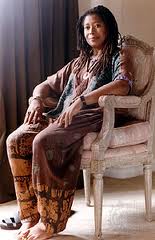
Alice Walker’s “Everyday Use” paints a very ingenious picture of the independence of human nature which resides in us all. The impact of her image is amplified by its setting; a black, single mother and her two daughters. Characters of three very independent personalities in spite of the apparent similarities in terms of culture and background. It is not an extraordinary tale. In fact it is somewhat common. The grace and wonder in “Everyday Use” is not the ordinary story of conflicting values and differing senses of identity. This is the very sort of story one sees over and over again. The magic in “Everyday Use” is Alice Walker’s artful telling of the tale. Walker injects a solid dose of realism which is effective even in a casual perusal, but shines quite brightly upon further study.

Her canvas is painted with brilliant colors from a broad brush. It can actually be difficult for one to become fully engaged in a creation such as this; seeing the big picture, focusing the lens, adjusting the tone. These can be such a bother, and the diamonds won’t retract their claws. Mama describes herself along with a daydream image, “I can kill and clean a hog as mercilessly as a man.” along with a daydream self-image, “I am the way my daughter would want me to be: a hundred pounds lighter, my skin like an uncooked barley pancake…  Johnny Carson has much to do to keep up with my quick and witty tongue.” (Walker 424/5) Indeed, Mama, the reader has much to do in seeing your story through the blazing image of your you. Her words portray her rural, self-supporting life graphically and with a comedic irony which makes them a rare pleasure to read.

Mama’s description also primes the reader’s imagination of Dee, who she describes as a “cute shaped” young lady who wears “a dress so loud it hurts my eyes… I feel my whole face warming form the heat waves it throws out.” (425/20) A daughter who possesses, “scalding humor that erupted like bubbles in lye.” (425/15) Thanks to a boy-friend of Dee’s, Mama tells us, “she didn’t have much time to pay to us, but turned all her faultfinding power on him.” (425/16) Need the reader wonder about the innate character of Dee?

What of Dee’s younger sister Maggie, the damaged and much more reserved daughter who lives at home with Mama? “Have you ever seen a lame animal, perhaps a dog run over by some careless person rich enough to own a car, sidle up to someone who is ignorant enough to be kind to him? That is the way my Maggie walks” (424/9)

Rich and robust! The contrast between the two sisters is painted with vivid luminosity, as is Mama’s perception of it. The magnificent independence of Mama, the good looks, intelligent, radiant, yet greedy and arrogant nature of Dee, the injured, unlucky, possibly even abused young Maggie, all sing from the pages in dulcet tones.

There is also stunning symbolism woven into the tale. The quilt, a symbol of family heritage which also reflects the sewn together aspects of this particular family, the differing desires in terms of what is to become of it, and the disparate values in which it is held. Reviewer Judith Hatchett noted this and commented, “the two views of quilts represents mutually exclusive lifestyles” (Hatchett 550) The quilt, the symbolic center of the tale, was woven from patches of clothing worn by ancestors of both girls, treasured by Maggie for sentimental and useful reasons, seen as a cultural treasure to own by Dee.

The image presented here is palpable. “Everyday Use” is a good story made great by the artistic wordbrush of Alice Walker, “as mercilessly as a man.”

~Bacon

Works Cited

Hatchett, Judith et al. American Icons: An Encyclopedia of the People, Places, and Things that Have    Shaped Our Culture. Westport: Greenwood Publishing Group, 2006. Print

Walker, Alice et al. Compact Literature, Reading, Reacting, Writing. Boston: Wadsworth Cengage Learning, 2010. Print


Hillary? Gun Control? People Control? Indeed!

I feel driven to restate a prediction I made over a year ago. Funny it is, how my predictions keep coming true. The birth certificate, Romney, Jim’s suicide, and so on. I’m seeing this next coming to fruition precisely as I predicted it would and I need to renew my prediction in order to increase the value of the coming “I told you so”s.

Shortly before the election Barragh Hussein Obuma will pull out. He’s in the conscious process of driving his own popularity down at this very moment. Making absurd moves which are offending even his most ardent supporters. The propagandia is even stepping in and slinging a few arrows. Hillary has made some interesting moves herself, and the Media?

Weekly World News Hillary to Challenge Obama for President

The Daily Beast  Hillary Told You So

Hillary Unleashed

Huffinton Puffington Post Nancy Pelosi: Hillary Clinton Should Run for President 2016

Petition to Congress Draft Hillary Clinton for President 2012

And there are many more! Precisely as I predicted!

She’ll not make the actual announcement right away. It’ll be closer to election time. She’ll have the entire commielib, lefist, traditional Democrat (including those pissed at Obuma beyond voting). She will be in like Flynn and Bill will be the first..  whatever he is.. You can bet yer ass he’ll be supporting Hillary. Good gravy! It’ll be historical! And there’ll not be the slightest glitch in the overall plan. The bigotry of the left against the successful will roll on ahead full steam. The excuse will be “It’s that Dang Obuma’s fault”. Look at the debt! We HAVE to do something radical! And Bacon’ll say, “see, I told you so!”

And one more..  The first attempted move will be income ceilings. Everything above the ceiling must go to the government. This one may not pass right off the bat, but it’ll be thrown in the oven right away.  Those damn eeeeeevil rich sons of bitches MUST PAY! (their fair share (thanks Alinsky.)) We’ll be feelin’ good as we watch freedom/responsibility swirling down the drain.

I’m feeling prophetic, maybe I should start a religion! The Church of Total Equality of Latter Day Retards… ‘er somethin’

~Bacon

July 4, 2012 Update

OK.. modification time. Embarrassing it is but I missed some important points. I misread Obuma for one. He will not pull out. He’s not simply a servant to his masters as I presumed. He is actually completely insane. He believes in Marxism right to his core. He believes he is doing the “right thing” as did Karl Marx who was a genius, and who’s “Manifesto” seems to be more closely followed by American leadership than is our own Constitution. Read the “Communist Manifesto,” particularly the demands in Section II which could easier be seen as the “constitution” America is currently following. In any case, Obuma must go down and I don’t think Biden is seen as a magnificent option by the Demonrat party. Hillary is the next in line. Were something to happen to Obuma and Biden (Satan forbid!) Hillary is the next in line…  My goodness, how simple.

In any case, my prediction of Hillary Clinton as next POTUS still stands, the point of interest is going to be how she gets there.  The crumbling of Obuma is happening, what I missed was the actual intentions of Obuma. Praise Allah!  Ok then…

May Swenson Told It Slant

The underlying biographical honesty inherent in art is unveiled by May Swenson in her poem “The Truth Is Forced”. The reader is introduced to a poet who tells the reader that this poet’s desire is to “be honest in poetry” (Swenson 2), but the reader will learn rather more than this particular poet’s desire for honesty. The poet didn’t force honesty into the words, as the title of the poem seems to imply, the poet ends up telling the reader that this production of words has actually forced honesty into the poet. The poet is revealed to, “…you (all or any, eye to eye)” (45). Swenson made the point that consciously or not, poems like all art, are acts of self discovery.

The poet describes the abstract dilemma faced by any artist desiring absolute honesty yet a sense of seclusion, “…eye to eye, I lie / because I cannot bear to be conspicuous with the truth” (Swenson 3-5). A dilemma compounded by this particular poet’s reticent nature “I would be exposed. And I would be / possessed” (10-11). Beyond a simple self introduction, the poet has set up the prerequisite for a foundational idea. The poet is not a self-centered seeker of attention, not a proud circus act, nor an intentional performer at all. This poet is private and reserved. This poet is not writing with the conscious intention of being spread naked upon the frontal lobe of the reader. “Really I feel as if / one pair of eyes were a whole hive” (19-20). Bees collecting the nectar for their own devices as well as being quite capable of delivering a sting. The poet tells the reader, my business is mine and so it shall remain, thank you very much.

Yet the poet does have something to say and can avoid the stings: “…say in symbol, in riddle, / …under masks / of any feature, in the skins of any creature” (32-36). Obviously the poet is not planning to walk naked down the page and here describes the clothes the poet can wear. Poetic line provides a veil behind which the truth can and does lurk unabashedly and without shame. The wish to “become naked in poetry” (40), will be fulfilled, and much more comfortably behind the veil this poet recognizes and describes to the reader as being provided by the poetic art of words. The individuality of the poet remains absolutely present yet mysteriously obscured.

Alicia Ostriker makes note of this in her section of the book  Body My House : May Swenson’s Work and Life, in which she makes comparisons of the works of May Swenson and Walt Whitman, into which she brings Emily Dickinson, ““Tell all the truth but tell it slant,” with fear battling the yearning for disclosure” (Ostriker 46). Which we were set up for by “Both the reticence and the desire for candor that wrestle with each other in Swenson’s eroticism are hinted at “(45). She elaborates, “…the poet twists and turns all through the poem; the poem does not state something known, but discovers its truth in its process” (46). She enhances this perception based on Swenson’s lines, “Whether you are one or two or many / it is the same” (Swenson 18-19) “Truth, forced through symbols and riddles and finally the naked self, into the poem, revealed to the poet herself, is a burden borne and born” (Ostriker 46). The poet in this performance was not only exposed to “one or two or many” (Swenson 18), the poet was exposed to the poet, “tells me / and then you (all or any, eye to eye) my whole self, / the truth” (45-47) So the poet is “eye to eye” even on the page after all, and what the poet tells turns out not to be a lie.

On paper, canvas, marble, or the sonic vibrations spawned from the keys of a piano, in art the naked truth resides. It may well not be perceived, and misperception may be the artist’s intent, yet the truth is there.  May Swenson recognized this and exposed what many an artist fails to recognize and may resist telling. Whether by design or inherent nature, however covert, the artist is always revealed in the art.

~Bacon

Works cited

Ostriker, Alicia. “May Swenson: Whitman’s Daughter.” Body My House: May Swenson’s Work and Life. 2006. 40-54. All USU Press Publications. Book 16.  http:/digitalcommons.usu.edu/usupress_pubs/16

Swenson,  May. “The Truth Is Forced”.  Nature: Poems Old and New. Boston: Mariner Books, 2000. 11-12. print

A Raisin in the Shade of Human Nature

Image

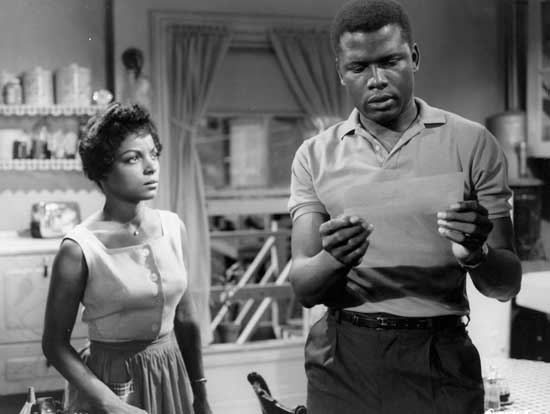
Often interpreted as a statement on racism, Lorraine Hansberry’s A Raisin in the Sun actually delivers a broad presentation of human nature, of which racism can be one possible aspect. Hansberry paints individual images of the stubborn inflexibility in the nature of her characters which is also central to the human condition in general, and is rarely overcome. Hansberry’s characters exemplify the human determination to justify and support one’s own behavior based on individual beliefs and interpretations of the world.

The beliefs and dreams seen here vary from that of Lena Younger’s (“Mama”), maternal, spiritual, house with a yard, and the anchor of family. Her daughter, Beneatha Younger, dreams of independence and rebels against her mother’s traditions, favoring a much more progressive, atheistic philosophy. Beneatha dreams of herself as a youthful adventurer who’ll one day be off to Africa, the land of her roots. In her brother Walter Younger, lies the very typical view of the masculine mastery of ones own destiny, a dream for which he is willing to risk everything. One of the play’s main antagonists, Karl Lindner, feels a loyalty to his neighbors, who happen to be, as is he, not black, like the Youngers, but white. The dreams and beliefs are as desperate and true to those who hold them as are the witchdoctor’s beads to the Bechuana. While the reader is not brought to an actual resolution, Hansberry delivers a series of very telling lessons on the individuality which burns within them all. The core differences and the challenge of overcoming them shines brightly from her stage.

Mama is driven by traditional beliefs, the strength and love of family and spirituality. At the core of Mama’s dream resides her God. Yet from her daughter Beneatha we hear, “It’s all a matter of ideas, and God is just one idea I don’t accept… I don’t believe in God… I get so tired of him getting all the credit for all the things the human race achieves through its own stubborn effort. There simply is not God! There is only Man, and it’s he who makes miracles!” (51)

This statement earns Beneatha an enthusiastic slap in the face from Mama. A slap which invokes from Beneatha not a change, rather a softly spoken, “…everybody thinks it’s alright for Mama to be a tyrant. But all the tyranny in the world will never put a God in the heavens” (52). Two closely linked people who absolutely love one another yet hold diametrically opposed beliefs as to the ultimate source of truth: for Mama it’s God, for Beneatha it’s man, for each it is equally the truth.

Racism, as obnoxious yet powerful a persuasion as has ever been devised, is demonstrated by one of the victims of that very conviction, Walter Younger, who utters to his wife, Ruth, as a result of his disappointment in seeing his own immediate dream of liquor store ownership slipping away, “Cause we all tied up in a race of people that don’t know how to do nothing but moan, pray and have babies” (87). Walter has obviously heard the white supremacist doctrine and here regurgitates it at his own black and pregnant wife. He sounds like a Kleagle for the Klan. But he’s really lashing out at his newly obvious lack of the mastery of his own family.

Karl Lindner is also sets up a justification of his own behavior when tells the Youngers, “…most of the trouble exist because people just don’t sit down and talk to each other. That we don’t try hard enough in this world to understand the other fellow’s problem. The other guy’s point of view” (116). He then makes this justification by pointing out that he’s actually looking for the younger’s best interest in suggesting a segregational alternative for them moving into a white neighborhood: “Negro families are happier when they live in their own communities” (118). Obviously Lindner is a racist, but does he know that? Does Lindner believe he can fool the Youngers? No, he is really fooling himself, “I sure hope you people know what you’re getting into” (149). Racism? Egocentrism? Benevolence? Has Lindner a dream? Certainly, yet his belief conceals the very lack of reason upon which it is grounded, and conceals it from himself.

Hansberry also shows the reader the possibility of conversion after the exchange during which Walter, as his son, Travis watches his father turn down Lindner’s offer. Mama, referring to Walter’s radical change of attitude says, “He finally come into his manhood today, didn’t he? Kind of like a rainbow after the rain…” (151). Mama believes that Walter has finally seen the light that she’s been aware of all along. The reader is not told whether it will last, but the possibility is certainly evident.

A Raisin in the Sun is the perfect example of a section of Hansberry’s work referred to by Olga Barrios in The intellectual Spear where she says Hansberry’s “concern with the human being went far beyond any barriers of color, race or culture” (Barrios 28). Hansberry has given us a portrayal of significantly varied beliefs, dreams, and behaviors and the logic used to justify them, to themselves and one another. Ultimately the tale ends up with no winners, no losers, no resolution, nor clear cut image of what the future holds. Yet Hansberry shows very clearly, human nature with its often irrational magnificence, portrayed in a light the typical audience might not have imagined, but Lorraine Hansberry did, and portrays it vividly.

Works cited

Barrios, Olga. The Intellectual Spear: Lorraine Hansberry’s Les Blancs. Salamanca: Atlantis, 1996. Web. 24 Apr. 2112

Hansberry, Lorraine. A Raisin in the Sun. New York: Vintage Books. 1994. Print.

Egoteneoism Rules the World

We all believe what we want to believe. In the case of science, PC activism and commielibbery lives the belief that global warming is man made (typically by those horrible rich people who do it knowingly and for money), a large number of scientists make this claim and do indeed back it up with evidence. Those who members of this crowd refer to as “science deniers”, listen instead to the large number, thousands, (now including NASA scientists) who claim it is not man made and support their, apparent, “non-science” with scientific and historical evidence. I’m not a scientist but what I’ve seen leads me to fall into the “science denier” crowd. Not being afflicted with hatred of the wealthy/successful allows me to reflect on the situational evidence independently of emotional disturbance and the situational evidence points quite convincingly at climactic changes far more dramatic than we’re seeing now, repeating over and over again from time periods far before those damn Republicans were scientifically sparked into existence.

There are those who look at Alinsky as a “red hearing” I think they mean red herring, nevertheless one who doesn’t see Alinsky’s “teaching” in the concept of bringing down the wealthy, hasn’t read Alinsky’s work. It’s not so much the actual bringing down of the wealthy that Alinsky promoted, nor that Obuma is working on, as it is the old communist adage that “derision would cause community audiences to laugh at their opponents, rather than listen to what their opponents were saying”, what Obuma is working on, quite successfully is division of the “classes”. Long before Barack Obama used the rallying cry of “Hope and Change,” Alinsky used the themes of “hope and change” as code words for creating a socialist revolution in the United States. Alinsky argued that the “have-nots” should seek their middle class allies among the young. The middle class being in his vision the surest source of true power. “The organizer dedicated to changing the life of a particular community must first rub raw the resentments of the people of the community; fan the latent hostilities of many of the people to the point of overt oppression,” (Alinsky) Alinsky believed his desired “change” could only occur by convincing the middle class to side with him in their own destruction. This is all just the tip of the popsicle, for a good chilling of the soul read about Alinsky and look at what’s going on, not only in America, but world wide. Alinsky is not the ultimate dog behind all this but he states the philosophy as clearly as any I’m aware of and was indeed responsible for the seeds of derision planted in Obuma.

(Corsi, Jerome R. (2012-02-06). Saul Alinsky:The Evil Genius Behind Obama, is one of many good resources)

The result of this take from the rich and give to the poor philosophy can be seen quite clearly here in America which since the advent of LBJ’s “Great Society” has quite successfully created a “permanent urban underclass plagued by teenage pregnancy, unwed mothers, children that drop out of school, and unemployable adults who have dropped out of the labor force. Magnificent!

“We can neither settle for a country where a shrinking number of people do really well while a growing number of Americans barely get by, or we can restore an economy where everyone gets a fair shot, and everyone does their fair share and everyone plays by the same set of rules …no american company should be able to avoid paying its fair share of taxes by moving jobs and profits overseas… in return, we need to change our tax code so that people like me, and an awful lot of members of Congress, pay our fair share of taxes… When Americans talk about folks like me paying my fair share of taxes, it’s not because they envy the rich. It’s because they understand that when I get a tax break I don’t need and the country can’t afford, it either adds to the deficit, or somebody else has to make up the difference, like a senior  on a fixed income, or a student trying to get through school, or a family trying to make ends meet.” All said by the same man who administrated the largest increase in deficit BY FAR, in history, Barrack Hussein Obuma.  And why? I wonder. Alinsky would be smiling.

There are those who choose from the vast number of wealthy, the few (Obuma cronie Warren Buffet for example) who do indeed take advantage of the government, effectively stealing billions of dollars, the bank bailouts, the auto industry bailouts, corporate welfare.. all programs pushed by the great far share Obuma, and hold these few up as typical examples of the wealthy. What they are is not “typical” what they are is criminal, just like the poor, underclass, African American who mugs the neighbor lady to pay for his meth, the student who refuses to pay off his school loan and on and on. The end of the tale is easily and clearly seen, in spite of the criminal element, the rich pay OVER 80% of the cost of our military, schools, parks… This is not a debatable claim it is an easily verifiable fact. It is a sad fact that those miserable greedy, rich motherfuckers are paying most of the bill.

Charitable contributions? Charity is in the mind of the giver, and even if the contributor is mislead by religious zealots, which many are, examples of public donation for truly worthy causes (much of which comes from those very religious zealots, in spite of those who funnel the contributions into business ventures of their own (criminal) are in incredibly large number and the majority of the contributors are from the “right”, since the “left” believes government should take care of it, so I don’t have to. And if I choose to travel the criminal road the government will protect me from retribution.

~Bacon

Rock ‘n Bluegrass at Sofa’s Corner

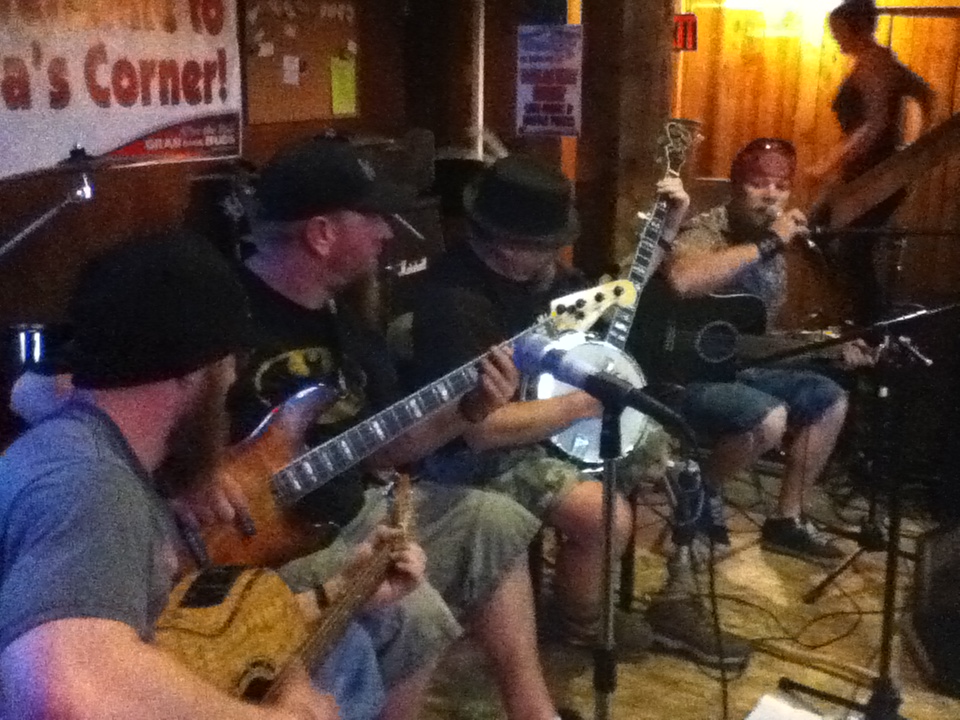
Alrighty then, from the left, Jed, Homer, Bacon, Bart and unknown woman of mystery.

Caught performing at Sofa’s Corner in Garland Utah at a Benefit show for Dallas Nutt, who survived two tours in Iraq as a Marine, is an honor student at USU and works in the VA at USU. Dallas experienced two ruptured brain aneurisms. He came close to leaving this world but is doing much better now although still not out of the woods entirely. Homer arranged this magnificent event at which several bands performed and a marvelous amount of money was raised for a gentleman who deserved it!

Bom Jesus da Mata My Ass

Written in reaction and as commentary towards “Death Without Weeping / Has poverty ravaged mother love in the shantytowns of Brazil?” by Nancy Scheper-Hughes, for a cultural anthropology class I’m taking…

I have a difficult time with this.  We live in a world where this type of thing need not be.  The wealth of the world is astounding and people still suffer indescribably from what we call poverty.  Coming, as I do, from a background of Christian “virtue”, it’s been stunning to realize that so much horror occurs in the name of “Jesus”. In this situation we hear of a midwife speaking, “just to dust the infant with baby powder and wait for it to die”, this sort of thinking justified as “cooperating with God’s plan.” It’s certainly hard to comprehend how anyone could see such a thing as being part of the “plan” of an all powerful deity. My own ethnocentrism temps me to explain it as the ignorance of a substandard civilization, but I see the same logic used right here in our own glorious, civilized, academic territory of wisdom where many see everything as directed by some unseen, inexplicable deity and all the misfortunes as being part of “his will” and the fault of our “unworthiness” of some sort. We see beliefs and behavior in another culture which are very similar to our own, and see it as horror, which many of us also see as “his will”.  The solution to such problems as this is indescribably simple, unfortunately the first requirement is logical concern against which, Gods, politics, power and money are vigilantly on guard. Bom Jesus de mata doesn’t mean “beneath the quiet” in my book..  But then, I’m just cooperating with God’s plan… ‘er somethin’.

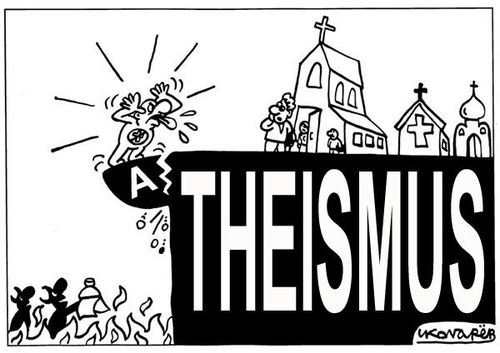
Atheismus?

Christmas is once again upon us replete with added modern splendors. For generations the celebration of the birth of Christ has been accepted by even the non-believers as a valid celebration, if not of an actual deity, or the flesh and blood representation of a deity, at least of the legend of good and kindness the name Jesus represents. Reasoned people celebrating of the birth of a figure who represents this ideology, be it real or symbolic, can be nothing but valid.

Right?

…Apparently not. The attacks are on, with antiChristians leading the assault AND accusing Christians of being the ones leading the assault. “Christians have been pursuing their so-called Christmas Wars with great vigor” ~About.com. Interesting statement considering that a war first requires opposition, thus it might seem reasonable that it is a war of self defense.

I’ve never heard so much from the Anti-Christmas crowd as I have this year. Pointing out the Pagan aspects of the Christmas celebration has become de rigueur. However there are valid reasons for this which have nothing to do with the validity of the celebration. The nature and history of humanity remove this argument from valid consideration since everything we do includes borrowing and taking advantage of present opportunities. Here’s a big Pagan celebration, lets take it over! The root of the copyright problem sits in the same soil.

Interestingly, one of the principal oppositional points refers to the secular commercialism of the celebration, as if this is somehow the responsibility of Christ/Christians/Pagans, or what have you. It is actually the fault of human nature and points towards the validity of celebrating the ideological aspects of the day rather than the commercial. Would this be religious rather than secular? I don’t know, and I don’t care.

As far as I’m concerned when it comes to Christ, I’m with Benjamin Franklin, “I think his system of morals and his religion, as he left them to us, the best the world ever saw or is likely to see…”  Franklin followed this by expressing doubts about the actual divinity of Jesus. Whatever Jesus actually was, divinity or not, he was and still is the the most significant historical figurehead of the concepts of morality, honesty, consideration and kindness. The story of “The Passion” is one of the most moving tales of willing self sacrifice in the name of goodness that can be imagined. Even if it truly was imagined its effect is potent and meaningful.

I am relatively certain that the nativity story we celebrate is a fiction. Certainly Christ was born, but the events are almost certainly described in a celebratory fashion designed to emphasize the importance of the event, and the descriptions vary significantly in the different tellings. Nevertheless, the first person in my liquor store, who scoffs about the nativity scene, shall be enthusiastically frowned upon by the Bacon.

Christmas represents peace and happiness, the celebration of it represents freedom/responsibility. Rejoice! Even idiots!

Christmas, Celebrate, Contemplate…

Anne Lewis from Lewis-Heaton Books, a magnificent source for books of true importance, mentioned an idea of true importance, “The Christmas tree…from now on will be decorated with pics of people past and present, that we love, objects that mean something special to each of us…and if no one gets it…pfffff, that is just the way it goes…after all, it is our family tree, and it will be filled with love and memories…” Her comment sparked thoughts of the bottom line importance of the Christmas holiday. Importance that is currently being forgotten and discarded.

I’m currently involved in a study of the history of Christianity about which I’m writing a book..  Should be done in ten years or so… But the importance of the man, Jesus has become stunningly apparent. There is no question, in spite of the arguments, that such a man existed. There is no question that the man was magnificently inspirational, even in his own time. The arguments from the time are not whether he had extraordinary powers, the argument was, where does the power come from.

It is certain that the Canonical references to Jesus are not actually historic observations of what actually occurred, but they are certainly, unquestionably important historical observations of the mentality of the times reflecting the “soul” of humanity. When blended with other accounts from the day, Jewish, pagan, and otherwise, one gains a very good reference to the importance of the man and his life which creeps into everything today. There are tremendous and thought provoking arguments pertaining to the truth and relevance of the stories, but the protocol taught by the man was, I think, addressed most appropriately by my hero, Benjamin Franklin, “I think his system of morals and his religion, as he left them to us, the best the world ever saw or is likely to see…” Franklin doubted the divinity of the man, but absolutely respected the wisdom, goodness and nobility of his philosophy concerning the proper behavior of man.

Thus, the celebration of his birth is perfectly appropriate as the celebration of the most important birth in history, whether you be Christian or not, leaving us with the question as to how the this birth should be celebrated and remembered.

The giving of gifts, celebration, singing, gathering together in social shows of appreciation, are absolutely historical and proper, even Biblical. What is slipping from our modern celebration of the event is thought and observation of the original philosophical roots. The idea Anne provides is perfectly appropriate to the core importance of the event. Including in the ornamentation, representations of actual objects and persons of worth. Indications and memories of the times, events and people of importance and worthy of our own commemoration. Reminders of the principles taught by the most historically significant person in history.

We are losing nobility. Humanity is losing its humanness. Jesus, whatever he may actually have been, indeed left us a tool which can be used to strengthen the important core of humanity. Christmas is far more than interesting, entertaining, fun, expensive…  Christmas is expansive. Contemplate! Celebrate!

~Bacon